
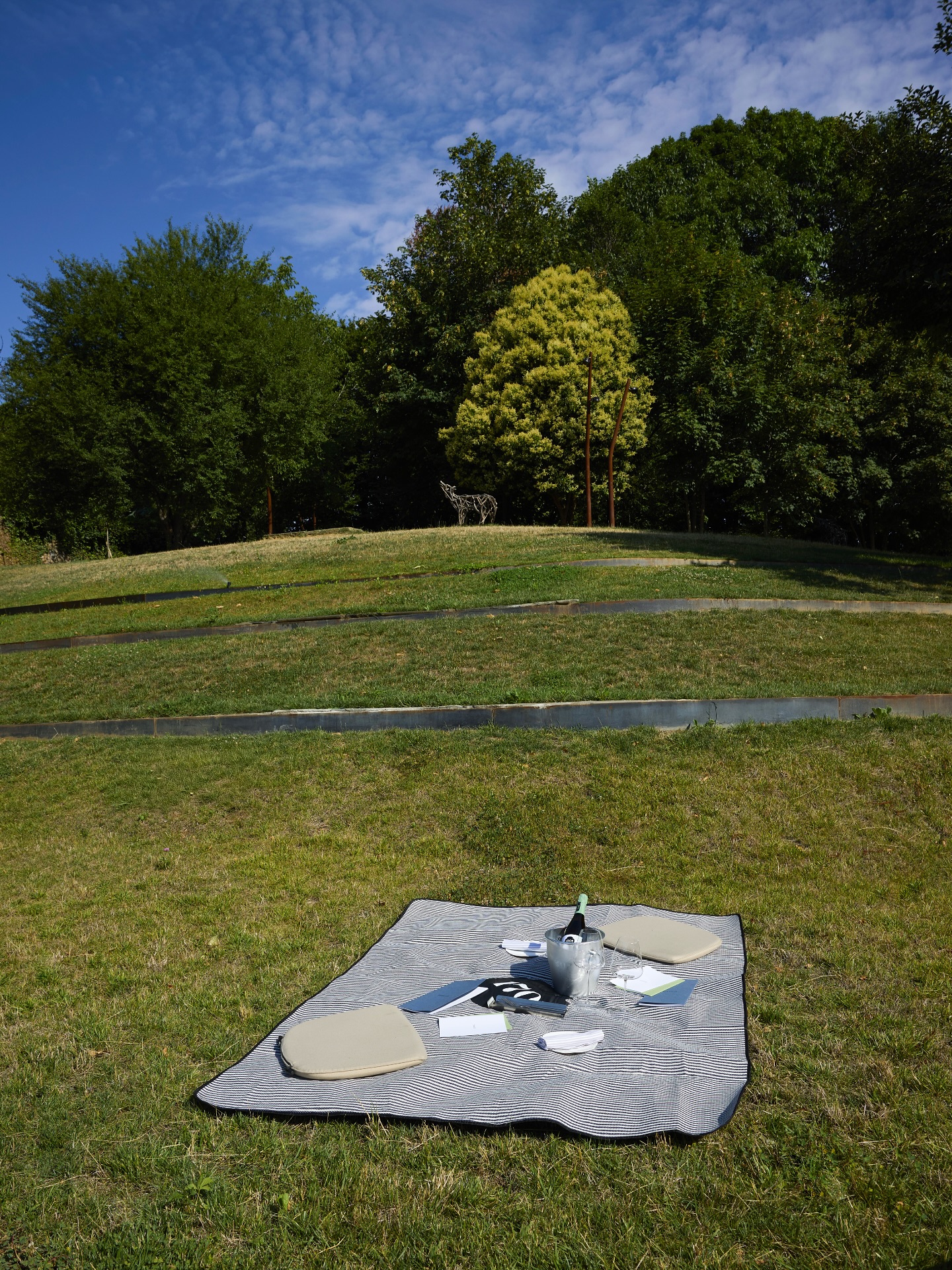
Art, nature, flavour and architecture come together in the PwC Gardens.
Nestled at the foot of the Sant’Agostino bastion and framed by the ancient Muraine walls, the PwC Gardens are a shared space where art and nature meet, offering the public a unique green area in the heart of the city.
This multifunctional project enhances the Accademia Carrara experience with an elegant bistro, a walkway connecting the museum galleries to the outdoors, a park of flowering carpets, and a romantic garden: places where the museum’s present engages in dialogue with its past.
This new green space brings to life an idea first envisioned in the early 19th century by Leopold Pollack. In 1804, during the architectural competition to renovate the Accademia Carrara, the Austrian architect imagined the redevelopment of this area with an English-style garden, highly fashionable between the 18th and 19th centuries. Pollack’s project, never realised at the time, has now become reality, fulfilling visitors’ long-held wish to enjoy this remarkable space within the urban fabric of Bergamo.
.
OPENING HOURS
Monday: 9.00 am – 5.30 pm
Tuesday: closed
Wednesday: 9.00 am – 5.30 pm
Thursday: 9.00 am – 12.00 am
Friday: 9.00 am – 1.00 am
Saturday: 10.00 am – 1.00 am
Sunday: 10.00 am – 6.00 pm
Access to the PwC Gardens is free of charge. The gardens can be reached from inside the museum via the walkway connecting the galleries to the outdoors, or through the independent entrance at Via della Noca 7.
HISTORY OF THE GARDES
The history of the green space adjacent to Accademia Carrara is closely intertwined with that of the museum itself. It begins around 1775, when Giacomo Carrara purchased a building in Borgo San Tomaso, with an adjoining kitchen garden that extended as far as the Venetian walls.
The building, renovated by Carrara with the help of architect Giovan Battista Gallizioli, soon proved inadequate for the needs of both the museum and the school. In 1802, it was therefore decided to expand it. A design competition was announced and, in 1804, was won by the Bergamo-born architect Simone Elia, who was commissioned to build the neoclassical structure that still houses the museum today.
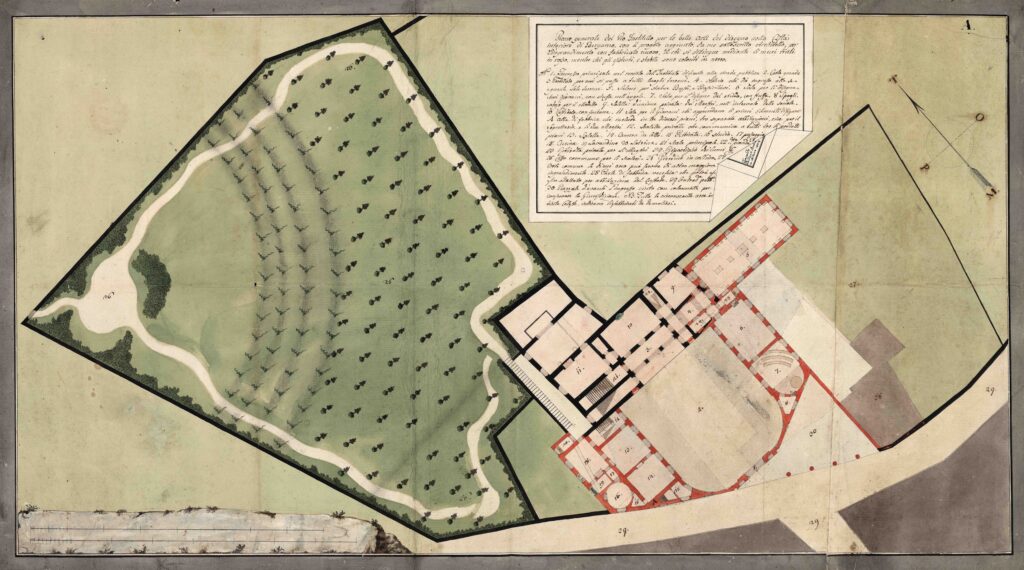
Leopold Pollack also took part in the competition, presenting a proposal of great importance for the history of the green space next to the museum. Alongside the construction of a new building, Pollack envisioned the redevelopment of the kitchen gardens rising towards the Sant’Agostino hill. His project is documented in a beautiful watercolour drawing preserved at Accademia Carrara. Pollack imagined the museum not as an isolated structure, but as an element integrated into the city’s urban fabric, proposing the use of the garden as a connecting hub between Bergamo Alta and the historic lower districts. This idea remained only on paper, and the green space beside Accademia Carrara fell into a quiet yet inexorable neglect that lasted for over two centuries.
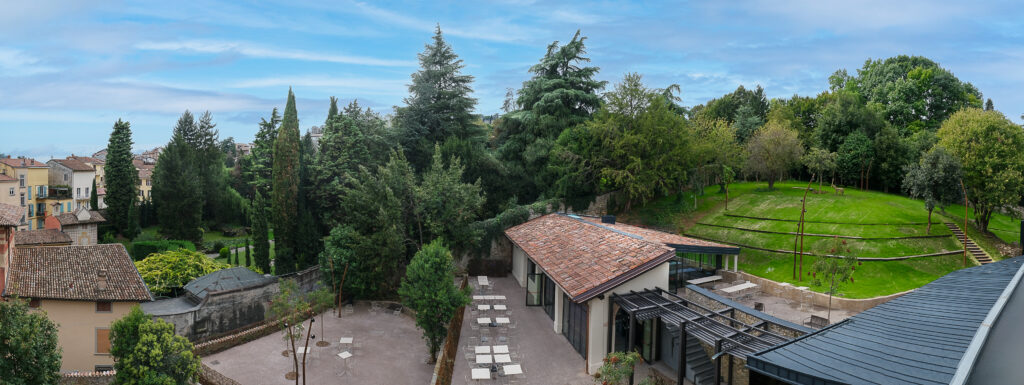
It was only in 2022, as part of the projects developed for Bergamo and Brescia’s designation as Italian Capitals of Culture for 2023, that the decision was made to redevelop this green space. The project was designed by architect Antonio Ravalli, with INOUT Architettura responsible for the landscape design, and was supported by Regione Lombardia, the Municipality of Bergamo, Fondazione Accademia Carrara, and a contribution from PwC.
The transformation of this large green area, located at the foot of the Sant’Agostino bastion and bordered to the north by the 15th-century defensive structure of the Muraine, included the creation of a multi-level romantic garden, an outdoor walkway connecting the different floors of the museum and allowing visitors to move directly from the galleries to the open-air space, as well as the restoration of a disused building converted into a bistro.
More than two centuries later, Pollack’s vision of reconnecting the museum with its natural urban context has finally become a reality.
PARTNERS
The PwC Gardens are realized with the contribution of
→ Regione Lombardia
→ Comune di Bergamo
→ Fondazione Accademia Carrara
Sonsor
→ PwC
Partner for the energetic transition
→ Edison Next
BÙ BISTROT IN CARRARA
In the museum’s green heart, Bù Bistrot in Carrara welcomes visitors with an all-day offering designed for every moment of the day: a dynamic cuisine that celebrates the careful selection of the finest local ingredients and a creative interpretation of the region. A convivial meeting place where food and drink engage in dialogue with the artworks and exhibitions of Accademia Carrara, turning every stop into a journey through flavour and beauty.